










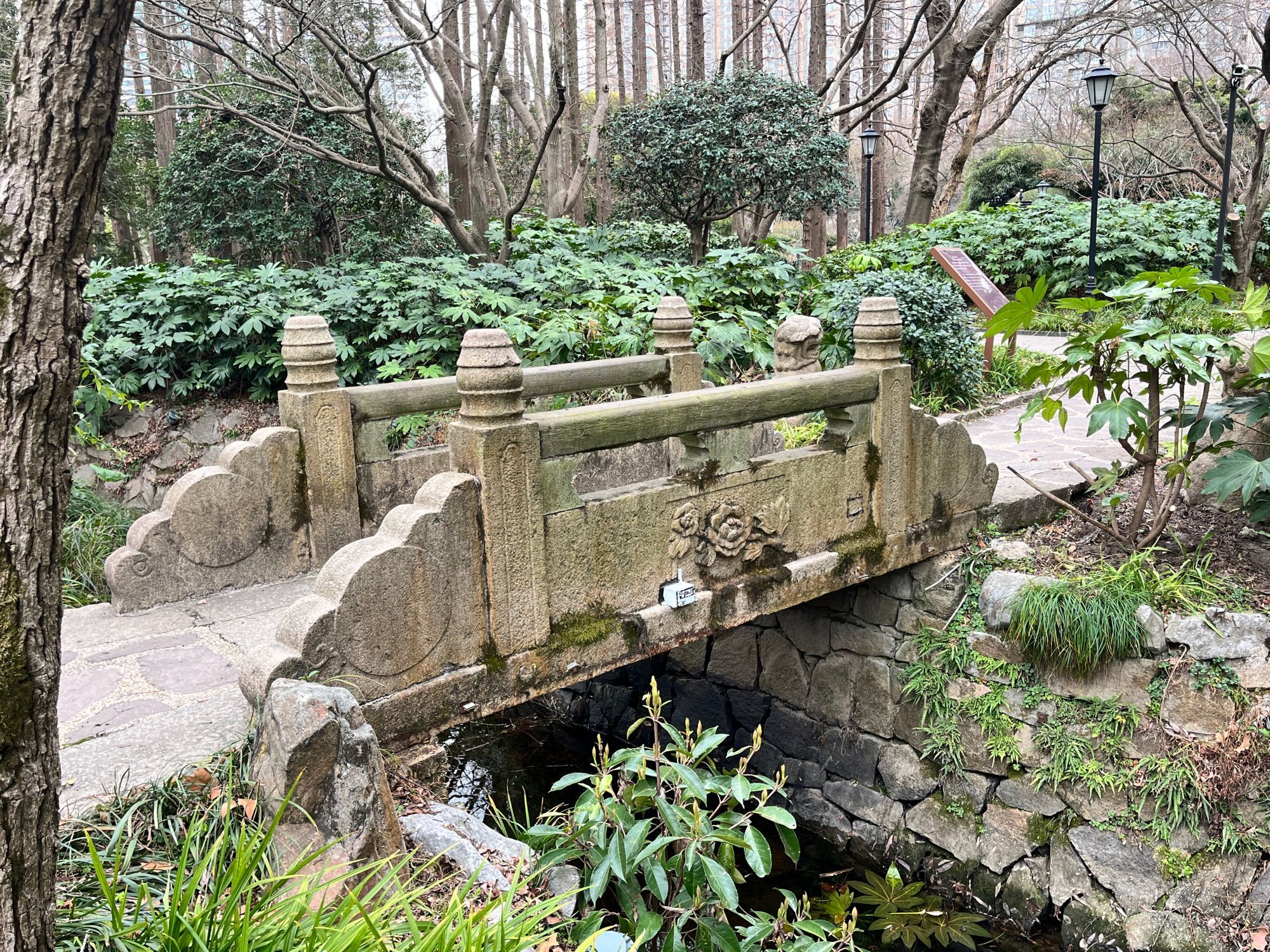
Xianghua Bridge
From the lingering charm of a Chan temple to renowned garden scenery: Xianghua Bridge, peonies, and Fahua Town
The former site of Zhaofeng Garden is located at 780 Changning Road, Changning District, Shanghai. Built in 1914, it is now Zhongshan Park. As one of the earliest parks in modern China, Zhongshan Park is not simply a transplanted Western-style garden. Its landscapes also carry the deep cultural heritage of the Fahua Town area, built up over a thousand years.
From the founding of Fahua Chan Temple in Fahua Town during the Kaibao reign of the Northern Song dynasty, the area developed into a major town in western Shanghai during the Ming and Qing dynasties. Its history and that of Zhongshan Park may seem like two parallel threads, yet they came together in 1958 through the project to fill in Fahua Town’s waterways and widen urban roads: Xianghua Bridge was moved into the park, and the Fahua peonies were transplanted there.
Xianghua Bridge is the oldest cultural landmark of Fahua Town. It originally stood in front of Fahua Chan Temple, now 525 Fahuazhen Road, spanning Licong Creek. In ancient times, it was a key bridge used by both pilgrims and local residents. In 1958, the old bridge was moved in its entirety to Zhongshan Park. Leaving the bustle of everyday street life for an urban park, it became a living fossil linking past and present.
Xianghua Bridge is a single-span flat-beam bridge, with arhat-style balustrade panels and drum-shaped end stones. Simple and ancient in form, the bridge is built of stone, its deck laid with three long stone slabs, and is made up of stone columns, stone handrails, stone guard panels, and stone lions at the bridge entrance. Both sides of the stone guard panels are carved with floral reliefs, showing single and paired peony motifs, carrying the architectural character and devotional memory of the Jiangnan water towns. At the southern end of the bridge stands a pair of granite stone lions, carved in a seated pose with heads turned to the side. Each is about 1 metre high, 50 centimetres long, and 40 centimetres wide. Finely carved, they hold a pearl and a cub, complete with bells and tassels. Together with the small bridge and flowing water, they form one of the twelve landscapes of Zhongshan Park.
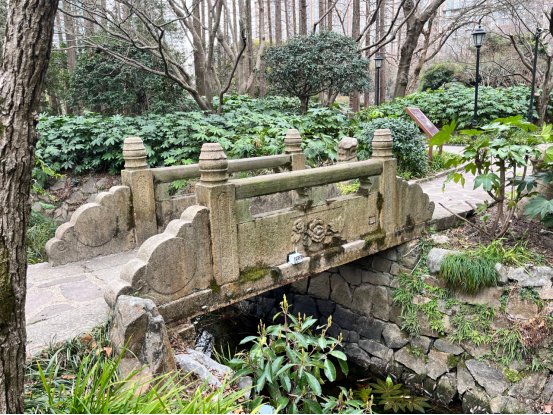
There are many bridges called “Xianghua Bridge”, each with its own character. The Xianghua Bridge in Zhongshan Park is carved with peony patterns, highlighting the beauty of the Fahua peonies and bringing lasting delight from generation to generation.
The Fahua peony is a distinctive cultural symbol unique to Shanghai, and it also earned Fahua Town the reputation of “Little Luoyang”. During the Qianlong and Jiaqing reigns of the Qing dynasty, peony cultivation in Fahua Town reached its peak, with more than 60 varieties, many introduced from Luoyang. Congxi Garden’s “Dianchun Flower Villa” was the foremost place in Shanghai for enjoying peonies. Whenever the flowers bloomed, the peony blossoms were as large as silver plates and appeared in a range of colours, drawing visitors from near and far. The garden owner invited friends to elegant floating-cup gatherings, creating an unprecedented scene of prosperity. This became the most celebrated of the “Eight Poems of Congxi”. The Fahua peonies carry the aesthetic taste of Jiangnan literati and the hopes embodied in local customs, while also preserving the wisdom of people living in harmony with nature. During urban renewal in 1958, the Fahua peonies were transplanted in their entirety to Zhongshan Park, where they have lived alongside Xianghua Bridge ever since. Today, when they bloom each year, their splendour still recalls the former elegance of “Dianchun Flower Villa”.
The cultural remains of Fahua Town are embedded in the spatial fabric of this modern park, creating Shanghai’s unique “ancient town within a garden” landscape. It is both a living example of the encounter and integration between Shanghai’s local culture and Western garden-planning ideas, and a model for protecting and reusing urban memory in the process of modernisation.