









Taofen Building
The story and spirit of Zou Taofen behind the name Taofen Building
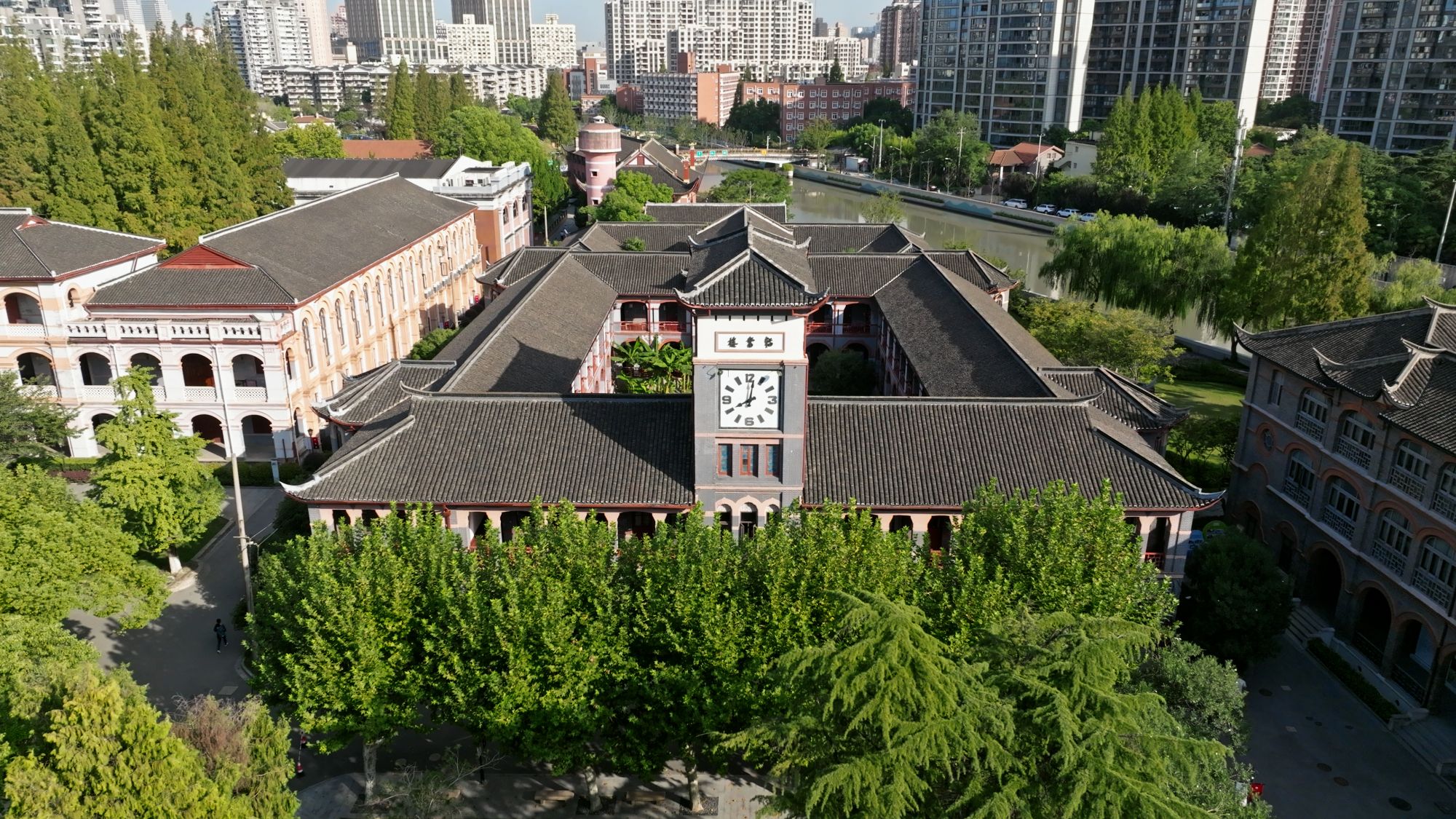
Taofen Building on the Changning Campus of East China University of Political Science and Law is one of the most iconic buildings in the historic former St John’s University complex. In 1951, it was renamed “Taofen Building” in memory of Zou Taofen, an outstanding figure in China’s press and publishing industry and a graduate of St John’s University.
Taofen Building is a two-storey brick-and-timber structure, and is the oldest and most central teaching building on the campus. Its walls are built mainly of grey brick, with red brick used in places to form decorative lines. It features Western-style arched verandas, a hip-and-gable roof covered with Chinese butterfly tiles, and upturned corner ridges. Inside, the structure retains the characteristics of a traditional courtyard house, with spacious corridors and large half-height windows, fully meeting the needs of modern teaching.
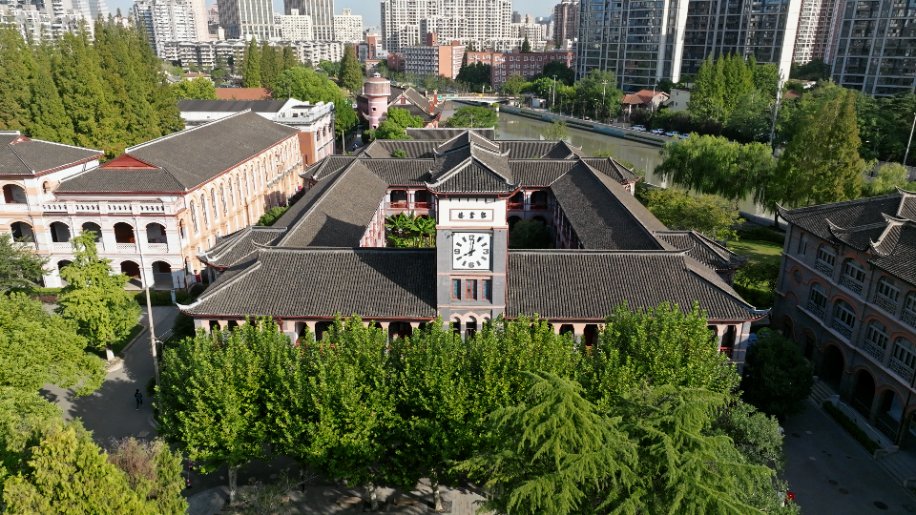
Photo of Taofen Building
Zou Taofen, originally named Zou Enrun, was an outstanding Chinese publisher, journalist, and political commentator. He was born in Yong’an, Fujian, in 1895. In his youth, he moved with his family to Shanghai, where he studied at the affiliated primary and secondary schools of Nanyang Public School, the predecessor of Jiao Tong University. Nanyang Public School was known for engineering, but Zou Taofen’s interests lay in the humanities. In 1917, he made a key decision: to transfer to St John’s University to study liberal arts.
In 1919, Zou Taofen graduated with excellent results from the liberal arts programme at St John’s University and received a Bachelor of Arts degree. After graduation, he worked successively as an English secretary, private tutor, and university professor. In 1926, he took over the weekly magazine Life, and from then on found his lifelong vocation.
He used clear, accessible language to explain complex political and economic issues to ordinary readers. He also created a “Readers’ Mailbox” column, personally replying to every letter from readers and building a deep emotional connection with them. The weekly’s circulation soared from an initial 2,000 copies to more than 150,000 before the War of Resistance, setting a record for magazine circulation in China at the time.
It was also during this period that he began using “Taofen” as his pen name. He once explained: “‘Tao’ is the ‘tao’ in keeping a low profile and biding one’s time; ‘fen’ is the ‘fen’ in striving without cease. I chose this name to remind myself: do not be too conspicuous, but always keep striving.” The name later became a condensed symbol of his spirit and character.
Zou Taofen was a revolutionary pioneer who helped advance China’s press and publishing industry. His spirit and ideals have been inherited and carried forward by generations of journalists, publishers, and media professionals. In commemoration and recognition of this, the Changjiang Taofen Award, named after Fan Changjiang and Zou Taofen, has become China’s highest award for outstanding journalists.