










St. John’s University Modern-Era Buildings: Residences 26–27
The Olympic starting point on the banks of Suzhou Creek
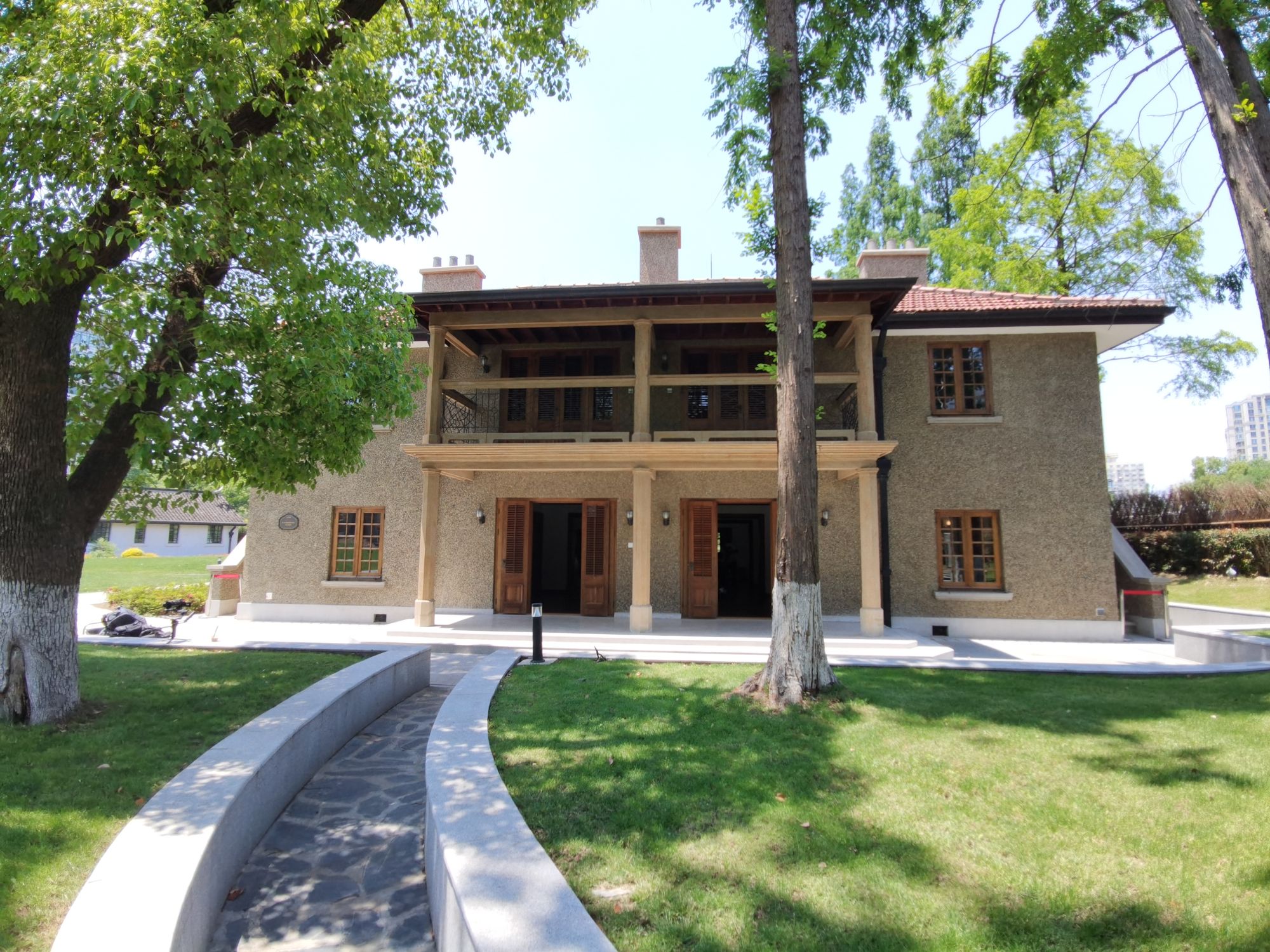
On the Changning Campus of East China University of Political Science and Law, embraced by the winding Suzhou Creek, a two-storey building with red walls and grey tiles stands among the trees: Residences 26–27 of the St. John’s University Modern-Era Buildings. This seemingly quiet century-old building in fact carries a stirring chapter in the history of modern Chinese sports. It was the former office of the China National Amateur Athletic Federation, the predecessor of the Chinese Olympic Committee, and is known as the “birthplace” of the Chinese Olympic Committee.
Residences 26–27 of the St. John’s University Modern-Era Buildings were built in 1929. The two-storey brick-and-timber structure has a symmetrical plan, pebble-dashed walls, simple façade lines, and a roof with dormer windows. Fine wrought-iron railings remain on the balcony façade. Inside, features such as the wooden staircase and fireplace have been preserved, reflecting the building’s original everyday residential function.
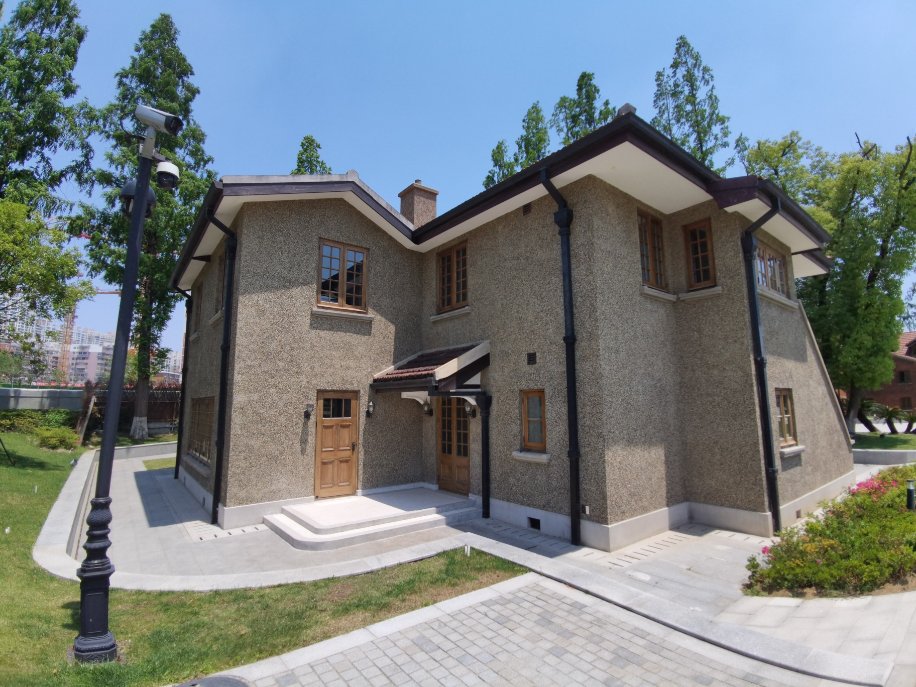
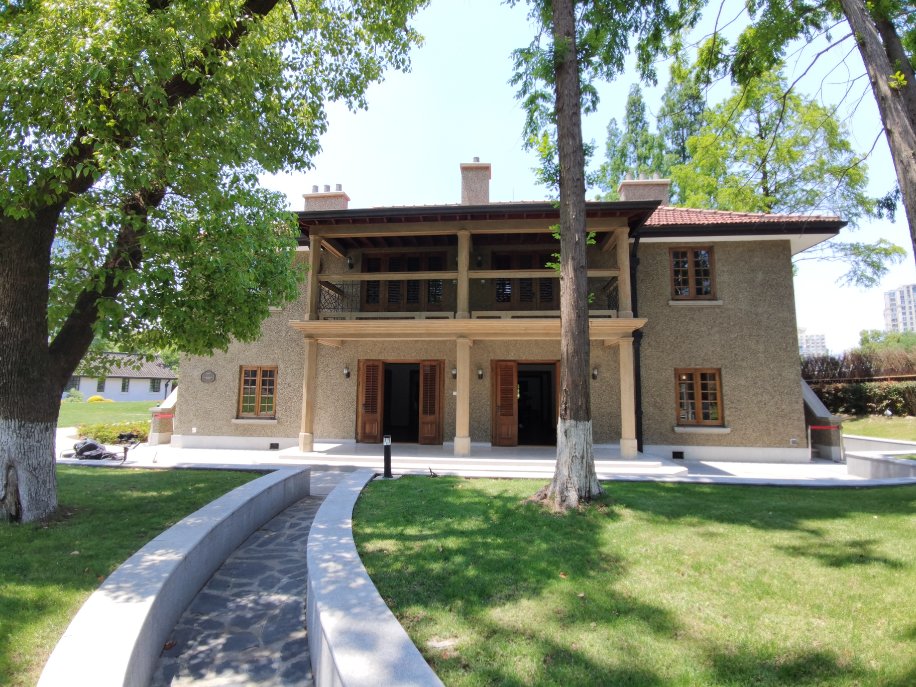
Current photo of Residences 26–27 of the St. John’s University Modern-Era Buildings
What truly secured Buildings 26–27 a place in history was their special role as the office of the China National Amateur Athletic Federation. In 1922, St. John’s University board member Wang Zhengting was elected a member of the International Olympic Committee, becoming China’s first IOC member and marking China’s first direct connection with the IOC. In August 1924, China’s first national sports organization, the China National Amateur Athletic Federation, was founded in Nanjing, with its headquarters office in Shanghai. Founders including St. John’s University board member Wang Zhengting and St. John’s honorary doctor Zhang Boling used Buildings 26–27 on the St. John’s University campus as the place where they discussed its establishment, held early meetings, and worked.
After its establishment, the China National Amateur Athletic Federation actively worked to develop links with the International Olympic Committee. In 1931, the federation was officially recognized by the IOC as a group member, marking China’s formal entry into the Olympic family and enabling it to perform the functions of a national Olympic committee. For this reason, the small building is widely recognized as the “birthplace” of the Chinese Olympic Committee. On the ground floor, the permanent themed exhibition “The Olympics Set Off from Here” displays items including “The First Chapter of China’s Olympics” brought back by Liu Changchun and valuable Olympic collections from different Games, vividly telling the story of China’s century-long Olympic journey.