










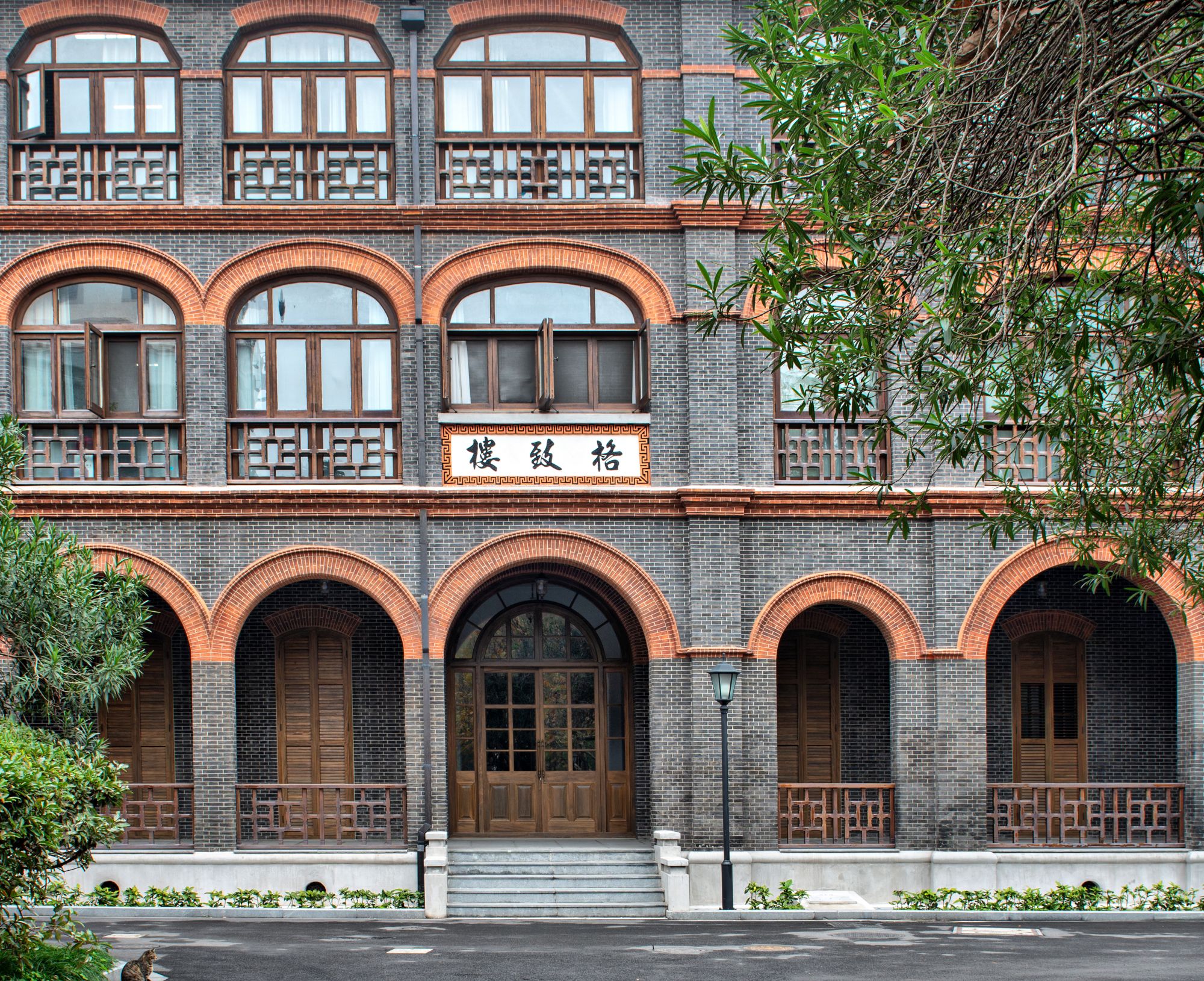
Gezhi Building
Gezhi Building at St John’s University — from Science Hall to the “Pearl of Suzhou Creek”
Completed in 1899, Gezhi Building was the first school building in modern Chinese higher education dedicated to teaching the natural sciences. It is also a typical example of the “Chinese-Western” architectural style within the modern building complex of St John’s University.
The origins of Gezhi Building lie in the rapid development of St John’s University. As demand grew for teaching and research space, especially for experimental teaching in the natural sciences, the original small villas could no longer meet the needs of expanded enrolment and science education. A dedicated school building became urgently needed. Gezhi Building was built in response: its foundation-laying ceremony was held on 20 November 1898, and its completion ceremony took place on 19 July 1899. It was named “Gezhi Room” and later became known as “Science Hall”.
The term “Gezhi” comes from “gewu zhizhi” in The Great Learning from the Book of Rites, and in the late Qing dynasty it was extended to refer to the natural sciences. The building is a three-storey brick-and-timber structure, covering a site area of 930 square metres and containing 60 rooms. When first completed, the first and second floors housed physics and chemistry laboratories and classrooms, as well as theology classrooms and a museum. The third floor was used as student accommodation, and was later converted into medical classrooms and a dissection room.
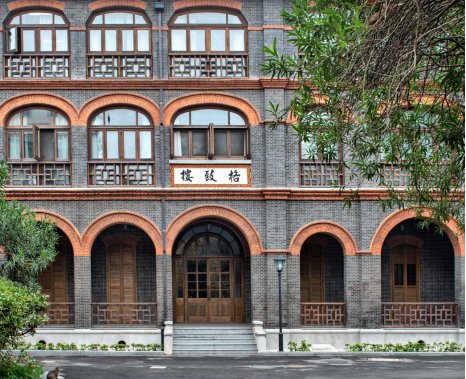
Detail photo of Gezhi Building
In 2021, East China University of Political Science and Law responded to Shanghai’s “One River, One Creek” development plan by opening a riverside walkway and incorporating the historic campus buildings into the city’s public landscape system. The area has been praised as the “Pearl of Suzhou Creek”.
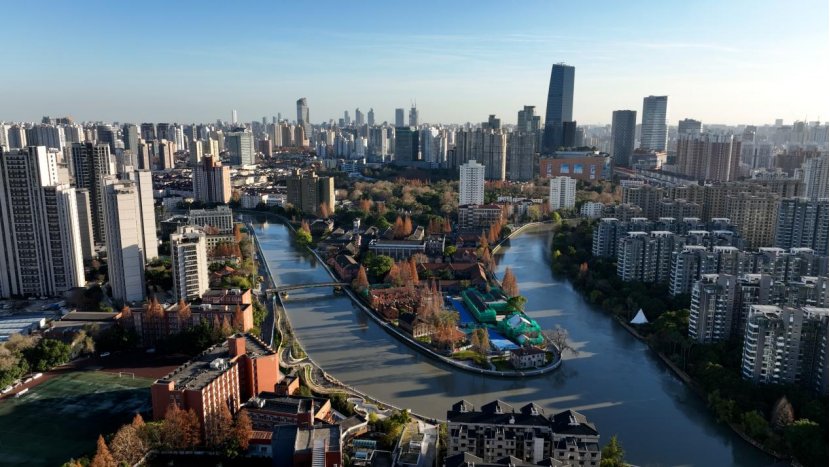
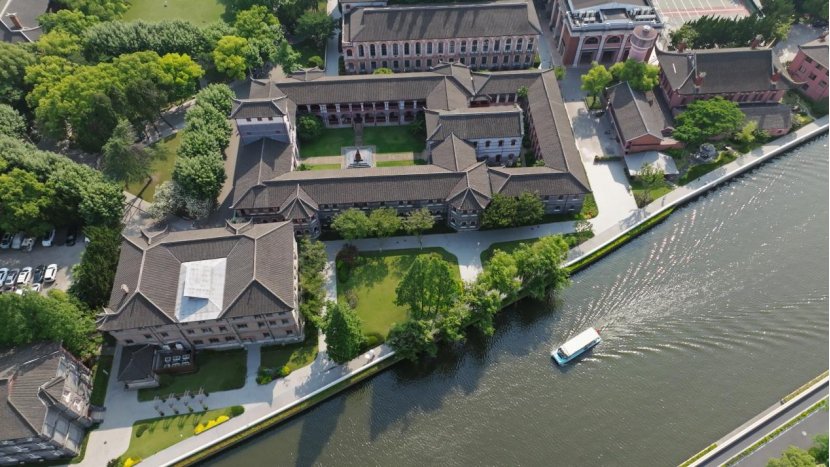
Waterfront landscape along the East China University of Political Science and Law section of Suzhou Creek