









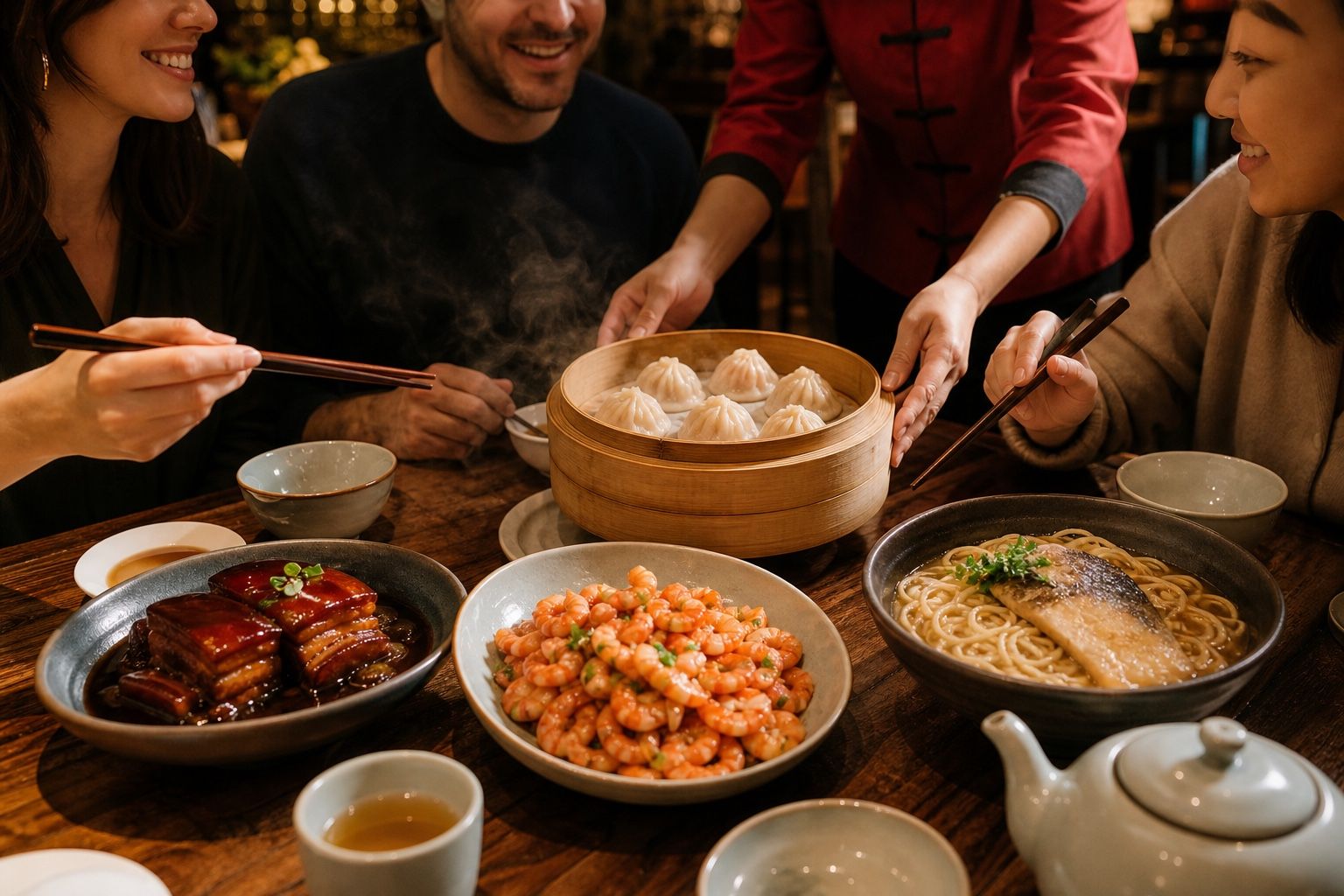
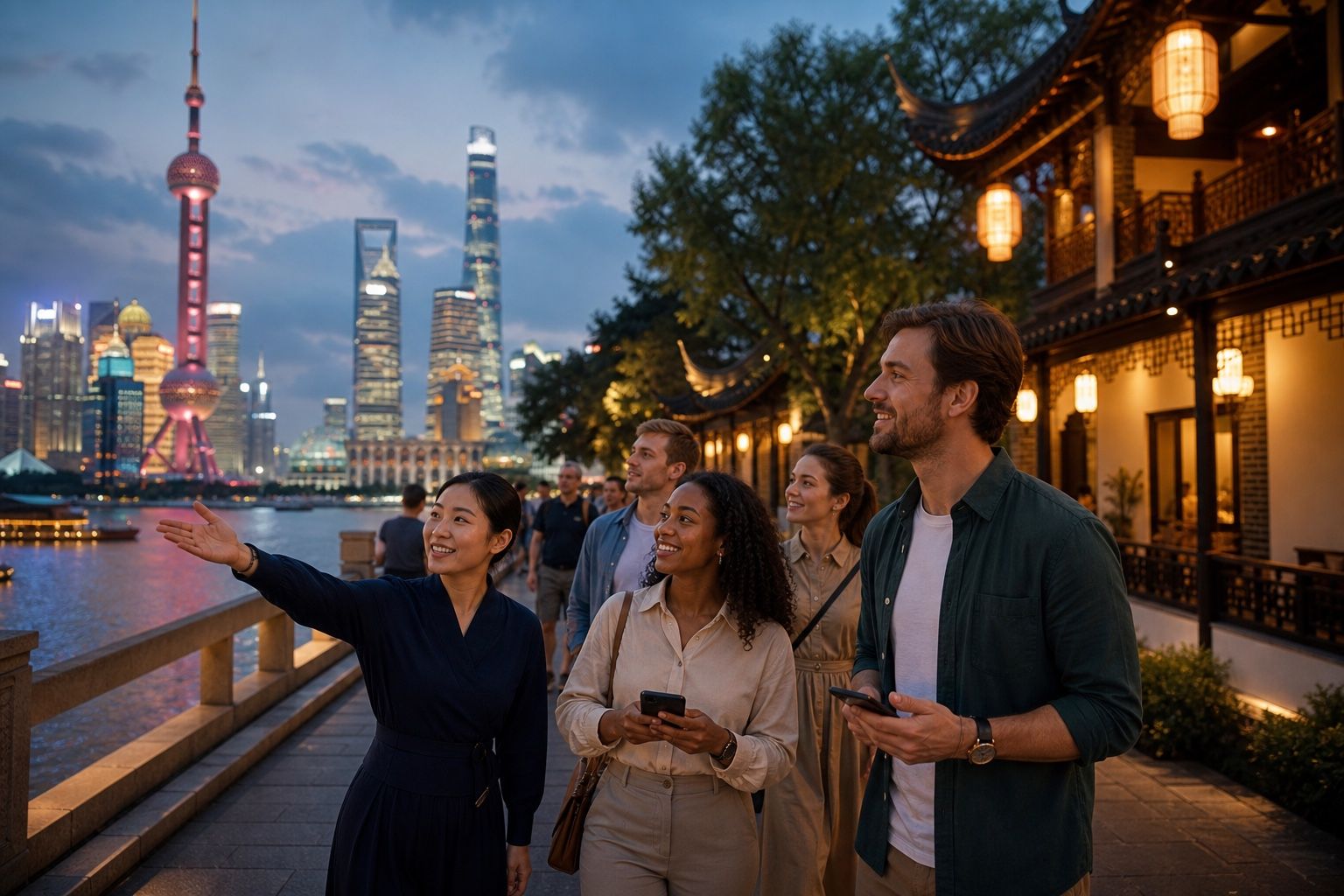
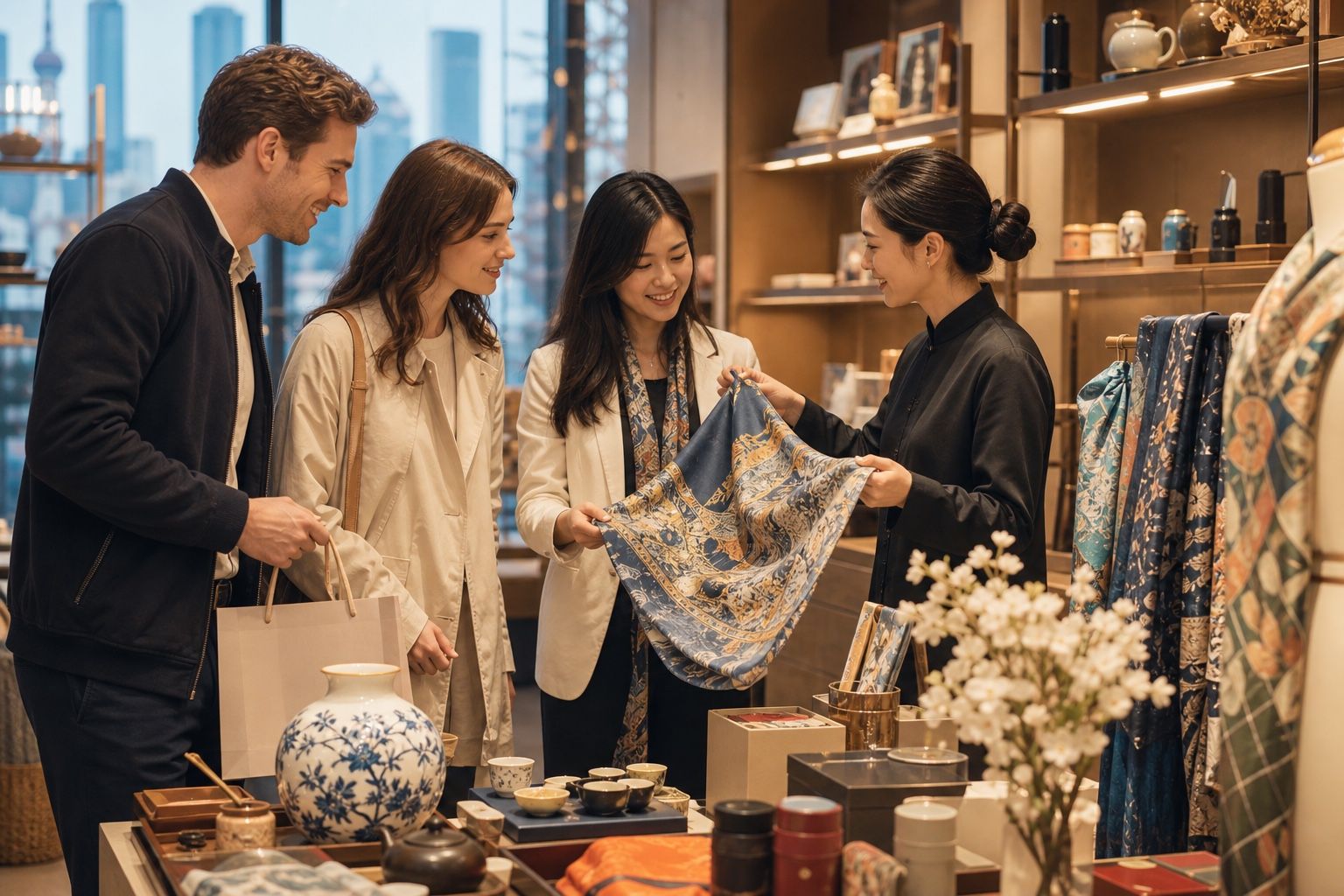
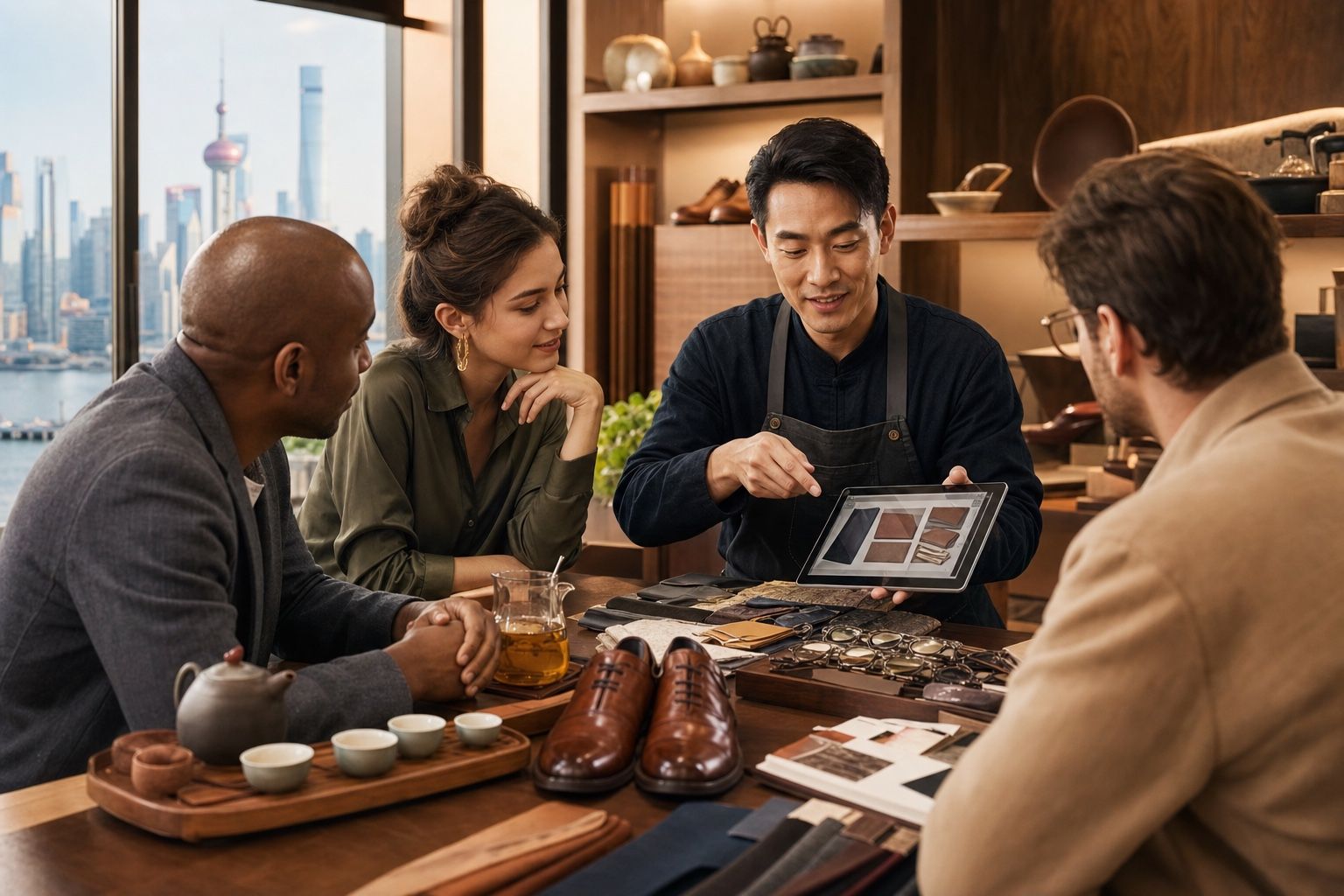
Shanghai is one of the best cities in China for a first, in-depth consumer experience, and is currently MeetChina.ai’s most important showcase city. It combines highly international public services, efficient transport and commercial infrastructure with local life at neighbourhood scale: morning coffee and snacks, afternoon exhibitions and plane tree-lined streets, and evening riverside restaurants and shopping district lights can all be organised into clear, understandable and bookable urban experiences. For first-time visitors to China, Shanghai’s advantage is not only that it lets you “see China’s modernisation”, but also that it provides access to dining, shopping, culture, routes and non-standard bespoke services with relatively low communication friction. MeetChina.ai organises this content into four entry points — eat well, have fun, shop well and customise — helping users first understand the experience, then connect with real products, merchants, commercial districts and service providers.

Shanghai
Understand Shanghai, Shop Shanghai
 View detail
 View detail
 View detail
 View detail
Shanghai is worth making the first stop for international visitors seeking to understand urban consumption in China. Its airports, high-speed rail, metro, ride-hailing and mobile payment systems are well developed, significantly reducing uncertainty for short trips; the core areas are a manageable distance apart, making half-day or one-day itineraries easy to combine; and the supply of dining, shopping, exhibitions, night tours and bespoke services is dense, suitable both for quick experiences between business commitments and for families, couples and friends exploring urban lifestyles in greater depth. More importantly, Shanghai offers rich layers of consumer content: visitors can start with accessible experiences such as local Shanghainese cuisine, coffee neighbourhoods, souvenirs and city routes, then move further into non-standard product scenarios such as bespoke footwear, eyewear, clothing and tea drinks. For MeetChina.ai, Shanghai is a strong test case for the front-end content logic of “organising information first by product and experience, then connecting it to merchants and commercial districts”.
Shanghai’s culture and history are not confined to individual landmark attractions, but are embedded across multiple facets of the city. The Bund presents the open memory of modern finance and a port city, the Hengfu historic area preserves plane tree-lined streets, historic buildings, cafés and lifestyle boutiques, while People’s Square, Nanjing Road, Huaihai Road and Lujiazui show the continuous evolution from traditional commerce to contemporary urban consumption. Haipai culture is inherently integrative: it absorbs external influences in business, design, dining and aesthetics, then continually transforms them into part of local life. In Shanghai, visitors can sense how the city layers history, commerce and everyday life through a meal of local cuisine, a neighbourhood walk, an exhibition, or a visit to a shopping centre or select shop. This sense of layering is well suited to being broken down by MeetChina.ai into content that is readable, searchable and recommendable.
Travel in Shanghai is best organised around areas, rather than by filling the itinerary with scattered attractions. For a first visit, Huangpu, Jing’an, Xuhui, Changning and Pudong can form the core activity area: the Bund and Lujiazui are ideal for understanding the city skyline, Hengfu and Jing’an for neighbourhoods, coffee and lifestyle experiences, and West Nanjing Road, Middle Huaihai Road and Lujiazui for shopping and brand consumption. For transport, it is advisable to combine metro, ride-hailing and walking. Popular restaurants, exhibitions, night tours and bespoke experiences are best booked in advance. Mobile payment is the main payment method, with an international credit card and a small amount of cash as backup. In terms of season, spring and autumn are more suitable for walking; in summer, be mindful of the temperature difference between indoors and outdoors; and on rainy days, itineraries can be shifted towards shopping centres, exhibition venues, dining and bespoke services. Short-stay visitors do not need to chase a large number of check-ins — choosing one or two neighbourhoods for a deeper experience will usually be more comfortable.